AI Blog Platform
Full-stack web application aggregating and comparing AI-generated content from ChatGPT, Claude, Gemini, and Grok with tiered subscriptions.
We use cookies to enhance your browsing experience and analyze site traffic. By clicking "Accept All", you consent to our use of cookies. View our Privacy Policy.
A selection of projects we've built for businesses, organizations, and mission-driven ventures.
Full-stack web application aggregating and comparing AI-generated content from ChatGPT, Claude, Gemini, and Grok with tiered subscriptions.
Comprehensive website redesign improving user engagement, navigation, and compliance for a growing counseling center.
Enterprise-level process automation and internal tool development for a healthcare technology SaaS company.
Automation tool supporting disaster recovery operations with Excel reconciliation, PDF parsing, and invoice aggregation.
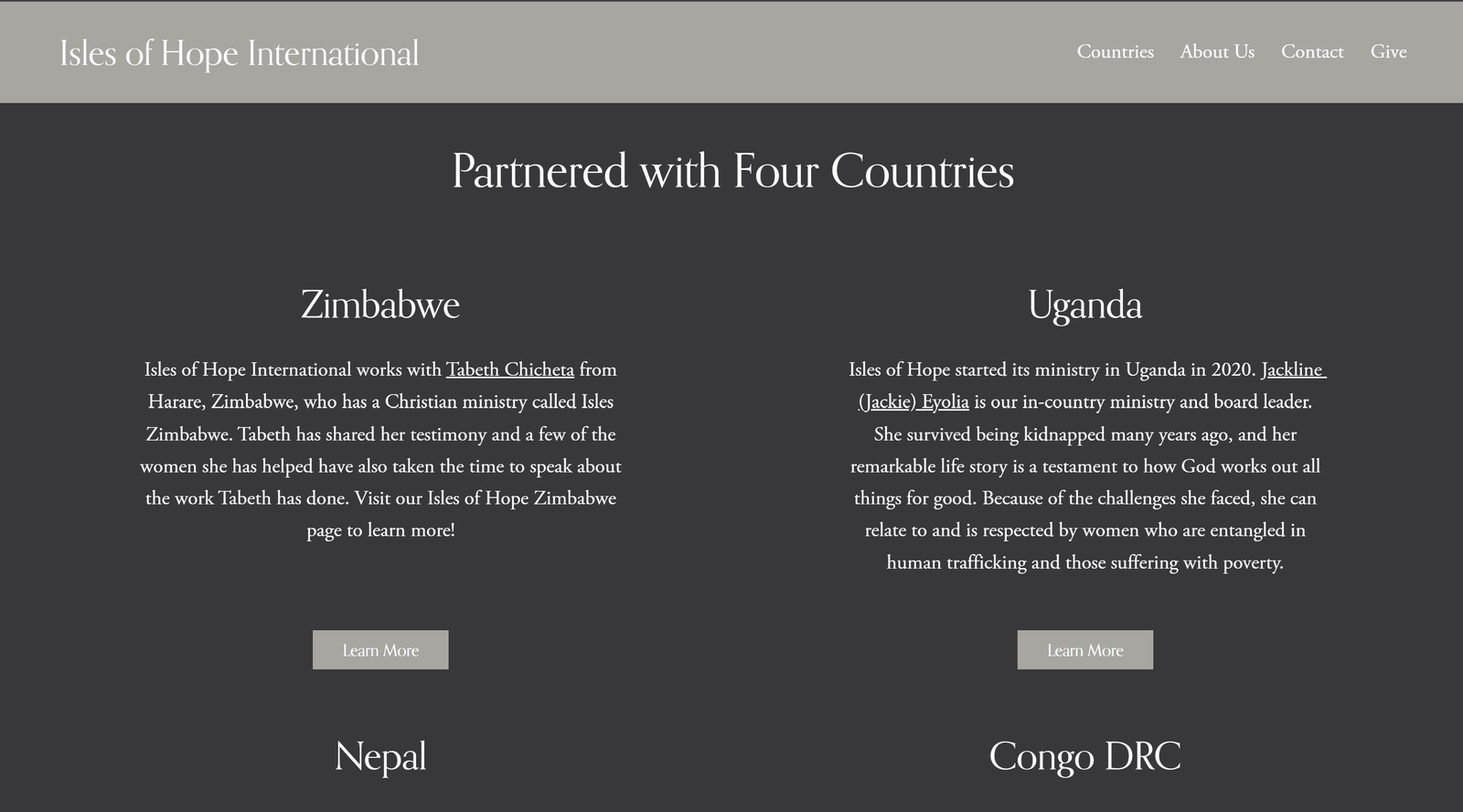
Custom website for Christian nonprofit supporting women globally with clear navigation, mission storytelling, and donation integration.
Let's discuss how we can help bring your vision to life.
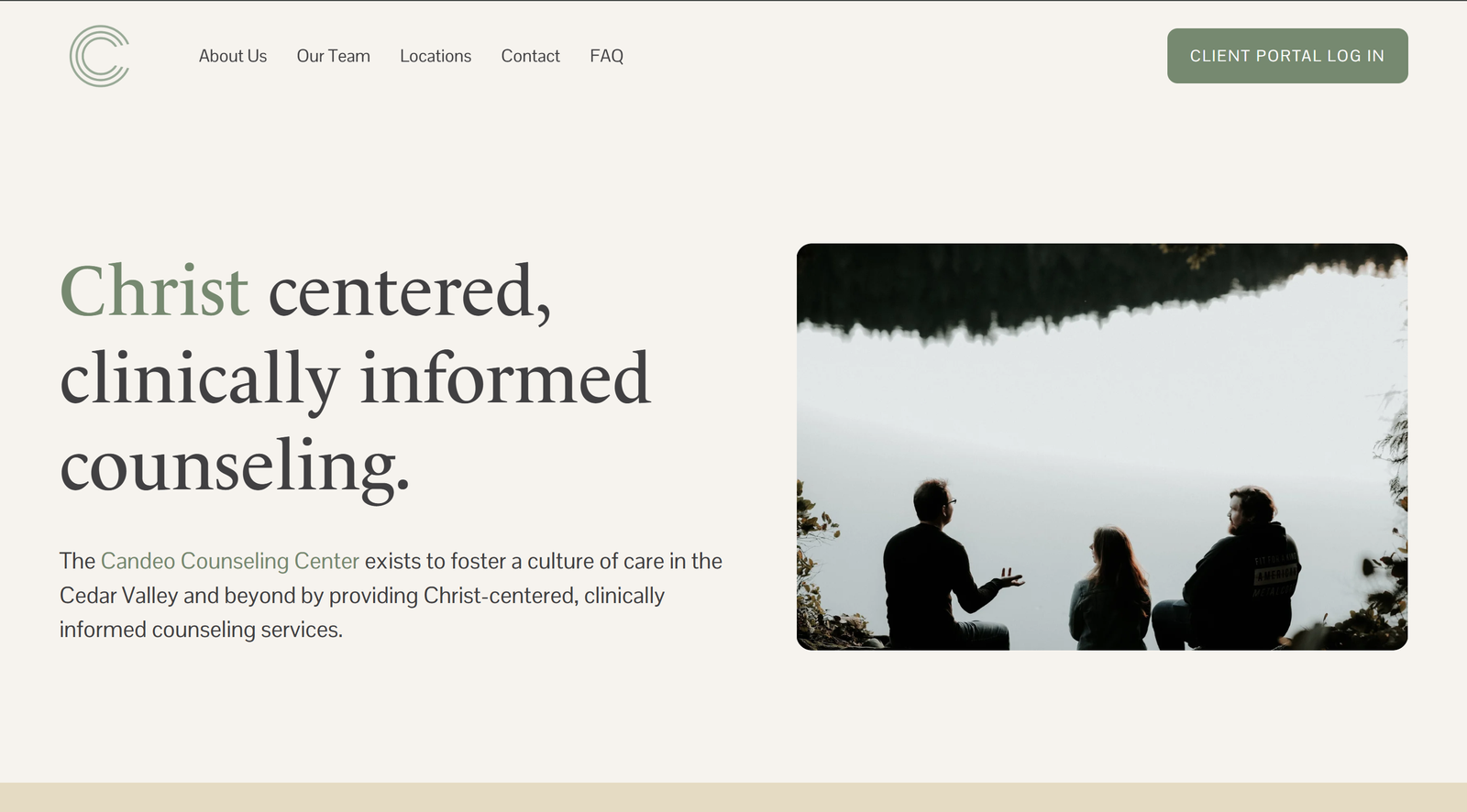
Candeo Counseling Center wanted to expand its reach beyond Iowa while maintaining a strong local presence. Their existing website was largely static, with limited engagement, difficult navigation for clients, and a contact process that lacked efficiency and compliance considerations.
The primary challenges were improving user engagement, making it easier for clients to find critical resources such as the client portal login, and restructuring the site to support multi-state growth. Additionally, the contact and intake process needed to be streamlined while ensuring protection of patient health information (PHI).
Key areas of the website were redesigned to improve usability, scalability, and compliance. The Our Team page was rebuilt to provide each clinician with a concise summary and a dedicated profile page, allowing clients to quickly find the right provider. The Locations section was enhanced with individual location tabs featuring maps, facility photos, and the clinicians available at each location, with direct links back to clinician profiles. The Contact page was upgraded with a PHI-compliant Google Form to securely collect patient information and streamline the intake workflow.
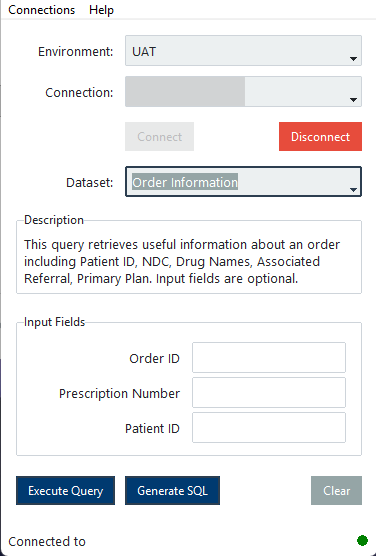
While working on a Specialty Pharmacy Support team, I identified an opportunity to improve how analysts triage and resolve customer issues by making enterprise data more accessible. The goal was to reduce friction when querying large databases while empowering analysts to confidently extract the insights they need.
Analysts regularly rely on SQL queries to investigate customer-reported issues, but enterprise-scale databases contain hundreds of tables, making it difficult to know where to start. This challenge was especially impactful for newer team members who were still learning the system architecture, resulting in slower triage and inconsistent investigation workflows.
I designed and built an internal querying application using Python with a Tkinter-based graphical interface. The tool connects to pre-configured databases and provides a curated library of predefined SQL queries, including contributions from experienced internal analysts and engineers. Each dataset includes a clear description of the insights it provides, and the application dynamically displays only the relevant input fields based on the selected dataset. This enables analysts to retrieve targeted data quickly without needing to understand or navigate the underlying database structure.
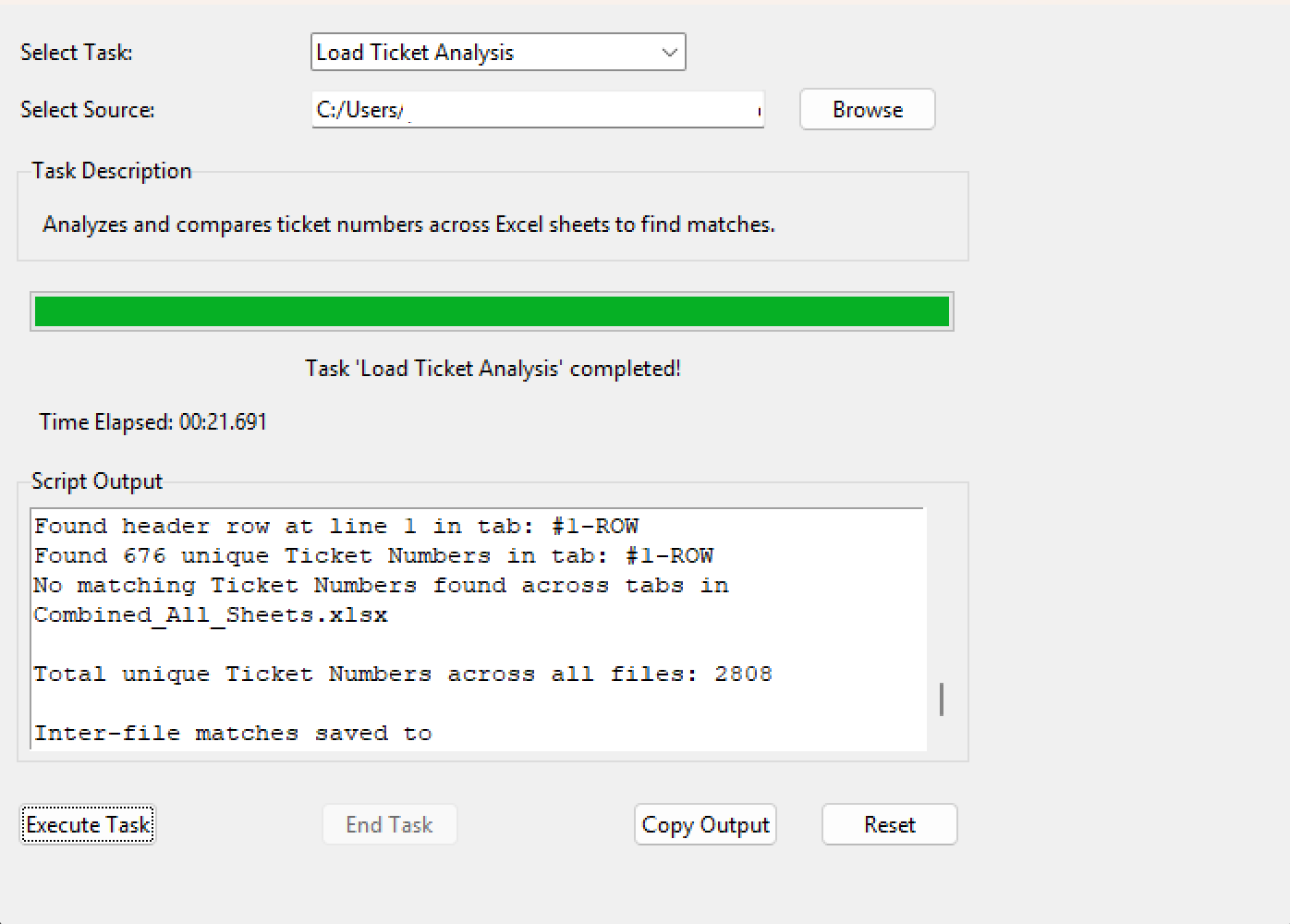
This project focused on building a purpose-driven automation tool to support government disaster recovery operations. The application streamlines how large volumes of spreadsheets, PDFs, and invoices are processed, reconciled, and transformed into standardized, audit-ready reports for field teams and analysts.
Disaster recovery projects generate extensive documentation, including load ticket spreadsheets, debris tracking records, waterway assessment PDFs, and multi-sheet invoices. Analysts were required to manually reconcile data across files, extract critical information from unstructured documents, and standardize outputs—often taking days per project and introducing risk of human error.
I designed and built a standalone automation application that performs intelligent Excel reconciliation, PDF data extraction, and invoice aggregation. The tool automatically detects duplicate records across files, parses structured data from complex PDF reports, and consolidates transactional invoice data while maintaining full traceability. Delivered as a single Windows executable, the application requires no installation or technical expertise and provides a guided, user-friendly interface.
Isles of Hope International is a Christian nonprofit organization dedicated to supporting women in need across multiple countries. The new website was built from the ground up to provide clear navigation of ministries, enhance storytelling of global outreach, and facilitate supporter engagement and donations. It highlights partner ministries in Zimbabwe, Uganda, Nepal, and the Democratic Republic of the Congo.
The organization needed a modern, mobile-friendly website that could effectively communicate its mission, showcase international partnerships, and provide an intuitive way for supporters to learn more and give. The site had to support multifaceted content—region pages, mission statements, faith commitments, and donation calls to action—while remaining clear and navigable for diverse audiences.
A fully custom website was developed featuring a clear top-level content structure highlighting: ministry efforts by country, the organization's mission and statement of faith, and multiple supporter touchpoints. Each country page presents background on local leadership, the scope of services offered, and opportunities for support or partnership. The design emphasizes readability, mobile responsiveness, and ease of updates for ongoing storytelling.
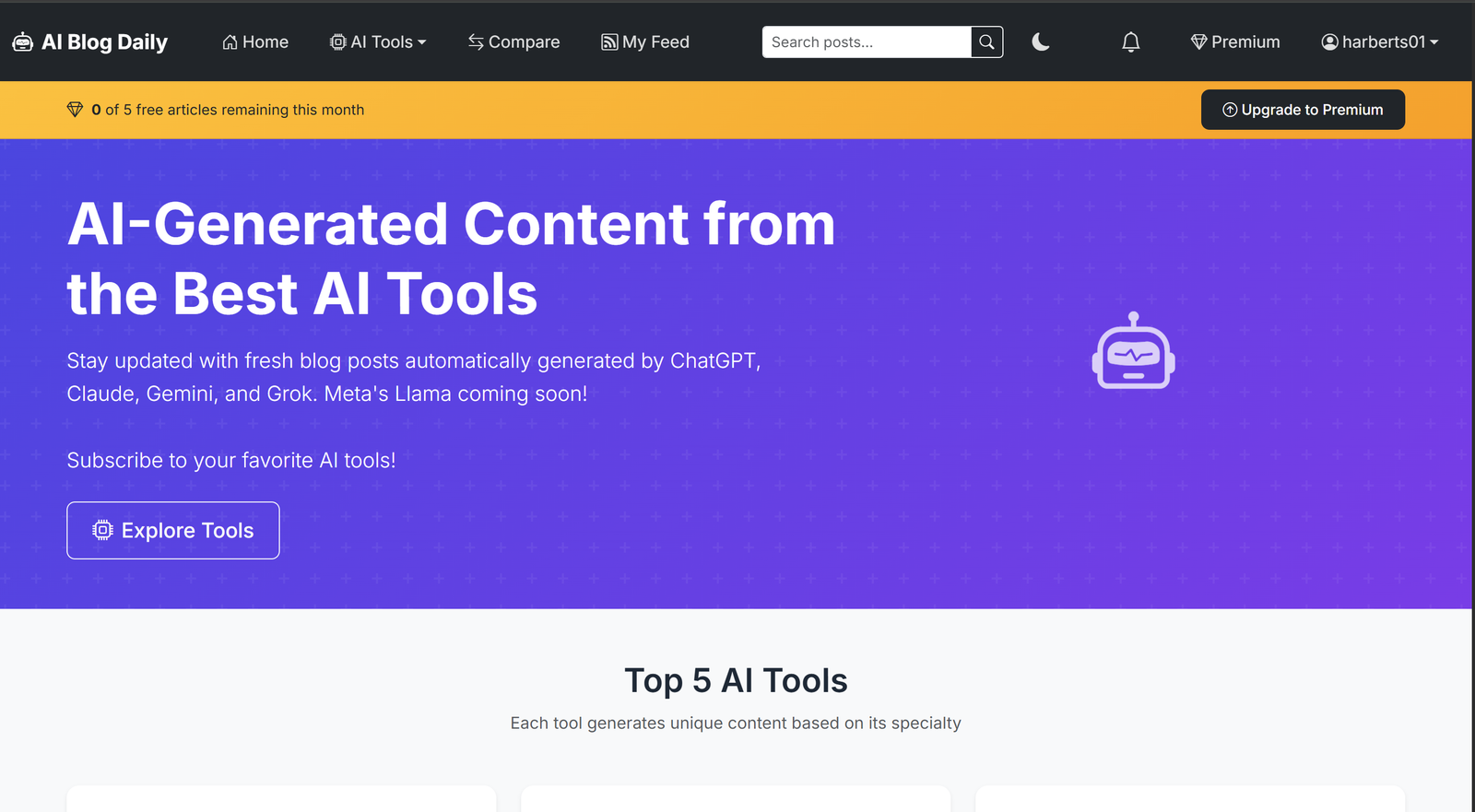
AI Blog Daily is a full-stack web application that aggregates and compares AI-generated content from multiple leading AI models (ChatGPT, Claude, Gemini, Grok, and Llama) in a single, unified platform. The application automatically generates fresh blog posts daily across 15+ categories and features a blind head-to-head voting system, allowing users to evaluate how different AI models approach identical topics — without bias.
With the rapid proliferation of AI language models, users face several key challenges: content from different AI models is scattered across multiple platforms, there's no easy way to compare outputs from different models on the same topic, separate subscriptions are required to access multiple AI services, and it's difficult to systematically explore diverse AI-generated content. The goal was to create a centralized platform with meaningful comparison tools and a sustainable monetization strategy.
Built a comprehensive platform using Python and Flask with a PostgreSQL database, integrating 5 AI APIs (OpenAI, Anthropic, Google, xAI, Together AI). The core feature is a blind voting system — users read paired posts without knowing which AI wrote them, vote across 5 categories (Writing Quality, Accuracy, Creativity, Usefulness, Overall), and only then are the authors revealed. Position randomization prevents positional bias, and a 5-minute edit window locks votes permanently. Free users receive 3 votes per week to seed community data.
Additional features include a premium analytics dashboard with leaderboards and head-to-head matrices, a follow system for AI tool notifications, Stripe-powered tiered subscriptions, bookmarking, threaded comments, in-app notifications, dark/light theming, and a comprehensive admin panel — spanning ~64 distinct routes across the platform.